How to improve balance using Inline Skates? Even beginners can practice.
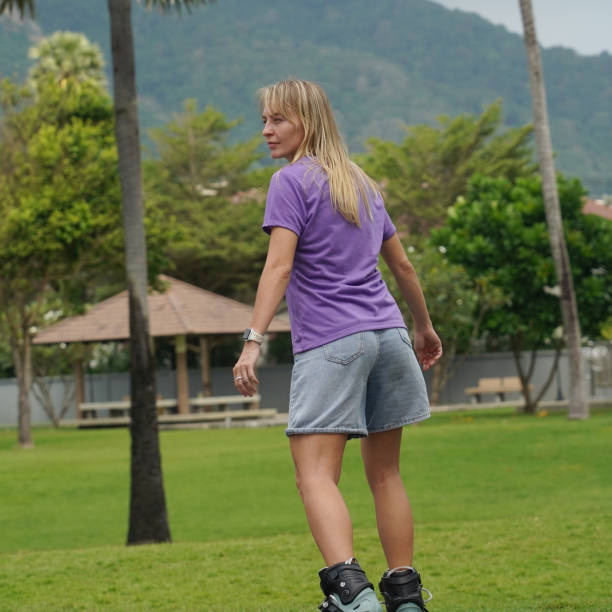
If you’ve recently started using inline skates, you might have noticed that after a few laps, your body feels more stable, and you have a sense of “more footing” when walking. This isn’t just your imagination. Inline skates are a very effective balance training tool, especially for beginners, where the effects are often more noticeable than expected.
In this article, I will explain in the easiest and most understandable way why skating inline skates can improve balance, how to practice more effectively, and how beginners can progress step by step.
Table of Contents
Why are inline skates an excellent way to train balance?
Many beginners panic when they first put on inline skates: “Why is my foot suddenly so slippery?”
This feeling of instability is the beginning of training.
The gliding process forces the body to make constant fine adjustments: the core muscles engage, the knees cooperate, the ankles correct the angle, and even the lower back participates in maintaining body alignment. These muscles are not used extensively in normal walking or running, but they must work simultaneously when wearing inline skates.
Here’s a simple explanation of why it works:
- ;Wheels reduce friction → the body must maintain its own balance.
- gravity.”Dynamic gliding: The brain constantly processes “changes in center of gravity”.
- Upper and lower limb coordination → Improves coordination and body awareness
- Prolonged engagement of core muscle groups → Overall enhanced stability
These adjustments, accumulated over time, will naturally manifest in daily life: walking becomes more stable, jumping becomes more stable, and even other sports become easier to control.

Why do people with no prior experience improve faster?
Some people worry, “I have poor balance; will it be harder for me to get started?”
Usually, the opposite is true—beginners often improve faster.
The reason is actually quite interesting:
- The less skilled you are, the more quickly your body needs to learn how to stabilize itself.
- The nervous system adapts quickly; the effects are most noticeable in weeks 1–4.
- Muscle memory is built from scratch; no old habits need to be corrected.
Simply put, your current “instability” is actually the best starting point for your body to learn balance.
Starting from scratch: The complete balance training process for inline skates
The training structure below is designed according to the progressive logic of “from the most basic → being able to glide steadily → being able to control direction → entering dynamic balance.” Whether you have never skated before or want to solidify your skills, you can follow this training.
1. Preparation stage: Be prepared with both equipment and mindset.
The first point is actually very important: choose a pair of inline skates that fit well and have sufficient ankle support. If
the shoes are too loose; it will be more difficult for you to maintain your balance; if the shoes are too tight, your feet will go numb, and it will also affect your control.
Secondly, beginners must wear protective gear. Falling itself is not scary, but being afraid to fall will prevent you from bending your knees and relaxing, making you more prone to losing your balance.
Also, if you feel like you’re standing on ice when you first get your feet on the wheels, don’t be nervous—this is a common experience for all beginners. All you need is 10–20 minutes to let your body get used to the “feel” of the wheels.
2. Static training: First, stand firmly, then glide steadily.
This step is crucial because all gliding movements are based on “center of gravity control.”
Stand firmly on both feet (basic balance)
Posture points:
- Feet shoulder-width apart
- Knees slightly bent
- The center of gravity is in the middle of the foot.
- Lean slightly forward; don’t stand up straight.
Hold for 30-60 seconds. The movement is not difficult, but it is very effective.
Single-leg balance (activates stabilizing muscles)
If you can hold a position on one leg for 10–20 seconds on flat ground, it will be easier when gliding.
It’s recommended to do one set with your shoes on and off, so you’ll feel the difference in your ankles.
This type of off-skate exercise is particularly beginner-friendly because it allows the body to prepare in advance.
3. First Glide: Posture is more important than speed
Many beginners want to “get off the ice as fast as possible” on their first try.
But the most important thing is to maintain a stable posture.
Remember this while gliding:
- Bend your knees a little (this is very important)
- Center of gravity sinks
- Lean forward slightly
- Open your arms and swing them naturally.
- Look into the distance, not at your feet.
By doing these things, almost all beginners will reduce their shaking by half.
Here’s a little trick: treat your arms like a balance bar and let them spread out naturally; it will give you the feeling of being “supported.”
4. Entering Dynamic Training: The Stage of Fastest Balance Improvement
Once you can glide steadily for several meters, you can add more “body-thinking” movements.
Acceleration and deceleration
Changes in speed force the body to constantly adjust its center of gravity, making it an excellent exercise for balance.
- Slow acceleration → More core participation
- Gentle braking → Improved ankle adjustment
Turning training
- Many people think that turning is a skill, but it is actually also a balance training exercise.
- Shifts in the center of gravity in different directions help your brain develop the ability to achieve “dynamic stability” more quickly.
Rhythm variation training
Disrupting the rhythm is one of the secrets to improving balance:
- Slow → Fast
- Fast → Slow
- Straight line → Small angle turn
The more “irregular” the training, the better the results.
Single-leg gliding (high-efficiency training)
After a few tries, you’ll find that gliding on one foot is almost the “ultimate balance training.”
Of course, don’t rush it; add it to your practice once you’re more stable.

The changes you’ll see in your body after improving your balance by skating inline skates
Long-term practice will make you feel your body “smarter and more stable.”
Stronger core
This isn’t the kind of hardcore training you do at the gym; it’s more about naturally engaged “stabilizing core” strength.
Improved coordination
In particular, the coordinated response of the legs, back, and arms makes the movements smoother.
More acute body awareness
You will have a clearer understanding of where your center of gravity is, what your feet are doing, and how your body can “keep up with the movement.”
Confidence greatly increased
Many people go from being “terrified at first” to “I can now skate a kilometer without falling.”
The confidence that comes with this leap is very real.
Common misconception: Why do some people practice for a long time but not become more stable?
Myth 1: Incorrect posture
Knees not bent, body too straight, center of gravity too high.
These all make skating “like walking on stilts.”
Myth 2: Focusing only on speed, neglecting fundamentals
Skiing fast is fun, but it doesn’t necessarily improve your balance.
Without basic center of gravity training, the faster you ski, the easier it is to fall.
Myth 3: Practicing intermittently
Balance training relies heavily on “cumulative” results.
The difference in improvement between once a week and three times a week is significant.
Myth 4: Ignoring off-skate training
Practicing in just skates isn’t very efficient.
A few minutes of training without skates is often more effective than skating for half an hour.
7 simple and practical practice tips for beginners
- Choose the right inline skates; don’t settle for anything less.
- The first week focuses on practicing standing and single-leg balance (with or without shoes).
- When gliding, be sure to bend your knees and lower your center of gravity.
- Keeping your eyes focused forward will make your body more stable.
- Gradually incorporate dynamic exercises such as turning, stopping, and rhythm changes.
- Practice 2–3 times a week, even if it’s only for 20 minutes each time.
- Set small goals for yourself so that you can see the progress.

In conclusion, inline skates are a lifestyle that “improves balance.”
If you’re looking for an easy way to improve your balance and coordination, inline skates are a great option.
It’s not as boring as the gym, nor does it require a strong foundation like some sports. As long as you’re willing to start from the basics, gradually familiarize yourself with your center of gravity, and practice static and dynamic stability, inline skates will help you evolve from a “complete beginner” to a “steady skater.”
More importantly, it will make you feel more grounded, more stable, and even more confident in your daily life.