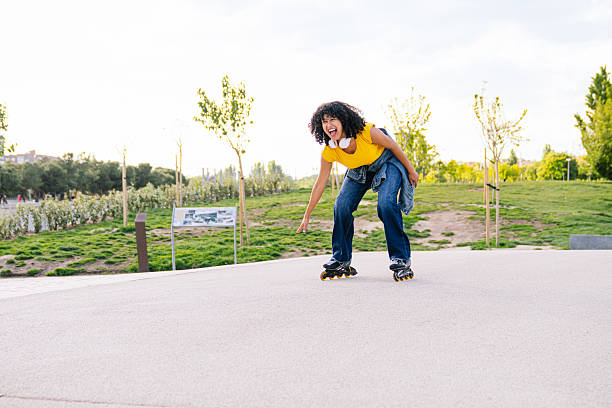
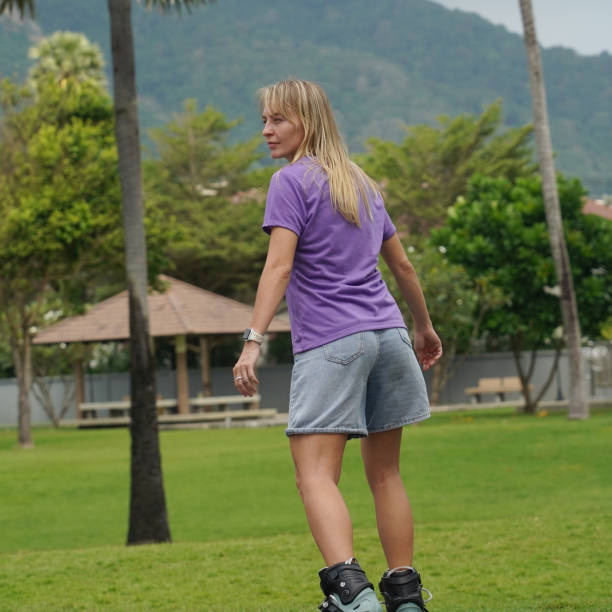
In the United States, more and more people are rediscovering inline skates.
They’re no longer just a weekend sport or a park activity but have truly become a part of city life—commuting, night skating, urban exploration, and even short-distance transportation.
But to be honest, the city is not a “gentle” gliding environment.
The urban environment presents unique challenges for inline skaters:
- Rough roads, concrete joints, and old sidewalks.
- Unstable pedestrians, bicycles, and electric bikes sharing space.
- Traffic lights, manhole covers, and zebra crossings to navigate.
If you’ve ever skated in New York, Los Angeles, Chicago, or Seattle, you’ll understand: when skating in urban inline skates, safety skills are more important than speed.
Table of Contents
1. What are the truly important preparations before riding inline skates in the city?
1. Equipment isn’t just about “looking professional”; it’s about “being able to save lives.”
Many beginners spend almost their entire budget on the shoes themselves when buying inline skates but neglect protection.
In urban environments, this is actually the opposite.
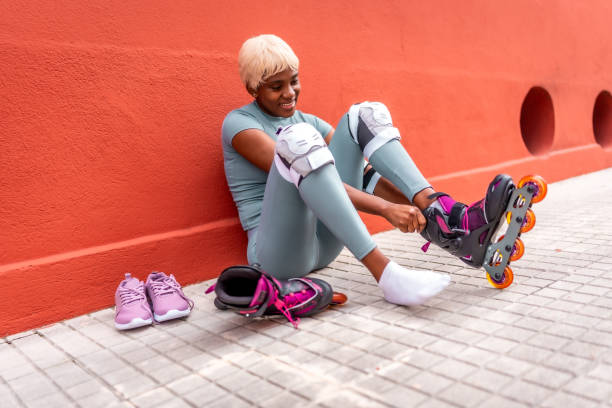
Required equipment:
- Certified helmets (bicycle or roller skating helmets are acceptable)
- Wrist brace (the wrist is the most common injury site in urban skating).
- Knee pads and elbow pads (not for falling more often, but for daring to skate).
You’ll find that when your body is protected, your movements are more relaxed and you have better control.
2. The wheels and road conditions really need to be matched.
Many city roads are not “smooth.”
- Concrete joints
- Asphalt particles
- Old sidewalk
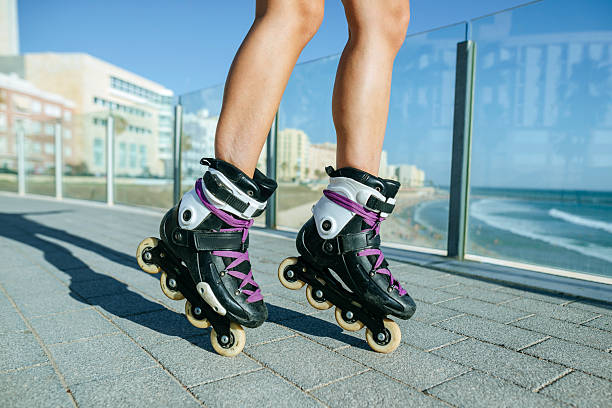
If you primarily skate in the city, we recommend choosing inline skates with:
- Wheel diameter: 80–90mm
- Hardness: 84A–90A
This is a realistic balance point between speed, shock absorption, and stability.

II. Basic control skills for urban inline skaters (more important than freestyle)
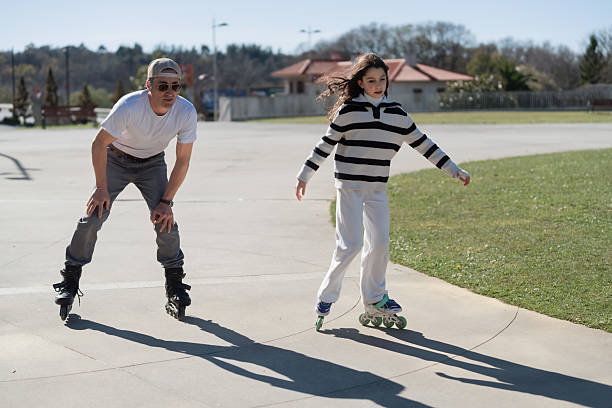
1. Gliding posture: Don’t stand upright; that’s a danger signal.
There is a very obvious pattern when riding inline skates in the city:
Those who fall the hardest are often the ones who “stand the straightest.”
The correct posture is actually not complicated:
- Knees slightly bent
- Slightly forward
- Upper body relaxed
- Look ahead, not down at your feet.
This isn’t for aesthetic purposes, but rather to prepare for any unexpected situations.
2. You should master at least 3 braking methods.
If all you know is T-stop, frankly, that’s not enough in the city.
Recommended combination use:
- T-brake: for daily deceleration
- Plow-type brakes: Very practical when there are many people and the space is small.
- Power Stop / Emergency Stop: A response to unexpected situations.
The truly safe inline skaters are not those who brake the hardest, but those who avoid reaching dangerous speeds in advance.
III. Route Determination and Risk Identification in Urban Environments
1. Learn to “look ahead for 3 seconds.”
While gliding through the city, your brain is constantly making predictions:
- Are there any cracks, manhole covers, or standing water within 5-10 meters ahead?
- Is there a possibility that the pedestrian might suddenly change direction?
- Is the bicycle approaching your route?
It sounds tiring, but once you get used to it, it becomes subconscious.
2. Where are inline skates unsuitable?
Even if you’re a skilled skater, it’s not recommended to skate in these areas:
- Downtown commercial street during peak hours
- Multi-lane main road
- Old neighborhood with severely damaged roads
The more ideal choice is
- Park loop
- Non-motorized vehicle lane
- The outer sidewalk, a spacious and predictable area

IV. Core Practical Skills for Urban Navigation
1. Moving through crowds: Slower is actually safer.
In cities, pedestrian behavior is often unpredictable.
The rule of thumb is simple:
- Glide only at a speed at which you can come to a complete stop.
- Do not approach pedestrians at high speed from behind.
- If necessary, simply set off on foot.
Truly skilled inline skaters don’t mind “looking a little slower.”
2. Stable control in confined spaces
When space is limited:
- Shorten stride
- Lower the center of gravity
- Replace large leg swings with parallel gliding
You’ll find that inline skates are actually very stable at low speeds, as long as you don’t panic.
3. The Real-World Rules of Intersections and Zebra Crossings
In the United States, law and reality are sometimes two different things.
Practical advice is:
- Slow down in advance
- Do not compete with motor vehicles for right-of-way
- Avoid sudden braking on wet, slippery surfaces.
Remember: You are always the weaker party.
V. What should a skater do in an emergency?
1. Take evasive action, and do not make a sharp turn.
When encountering sudden obstacles:
- First reaction: Lower your center of gravity
- Small-angle lane change
- Slow down at the same time, instead of just dodging.
Many falls are caused by turning too quickly.
2. If you really have to fall, how can you fall more safely?
Nobody wants to fall, but it’s unavoidable in the city.
There are only a few key points:
- Without using your hands to support yourself
- Try rolling sideways to reduce force
- Tuck your chin in to protect your head.
This is why protective gear is so important in urban skating.
VI. Long-term safety principles for urban gliding
- Pedestrians always have priority
- Do not wear headphones, or at least keep the volume low.
- Controlling speed = Controlling risk
- Fundamental technology is more important than speed.
To say something that might not be so “cool”:
The real expert is someone who can skate in the city for five or ten years without getting injured.

FAQ: Frequently Asked Questions about Urban Inline Skates
Q1: Are inline skates suitable for beginners in American cities?
Yes, but it’s recommended to start in low-traffic areas, such as parks or quiet neighborhood roads, and make sure you have basic braking skills.
Q2: Are large-wheeled inline skates better for city skating?
Not necessarily. Larger wheels are faster, but for beginners and in complex road conditions, controllability is more important than speed.
Q3: Can I still skate on inline skates after it rains?
Not recommended. Slippery surfaces, manhole covers, and painted lines all significantly increase the risk.
Q4: Are inline skates suitable for commuting?
It’s possible if it’s a short distance, the route is familiar, and the road conditions are controllable, but safety should always take precedence over efficiency.
In conclusion: The city is not a racetrack; safety is the core skill of inline skates.
The allure of inline skates in the city lies in their freedom, fluidity, and rhythm.
But what truly allows you to enjoy this freedom long-term is only one thing—safety.
When you learn to control your speed, anticipate your environment, and respect others, you will find that the city is no longer an obstacle but your gliding map.