Inline skate braking systems explained: A guide to choosing between inline skates with brakes and those without.
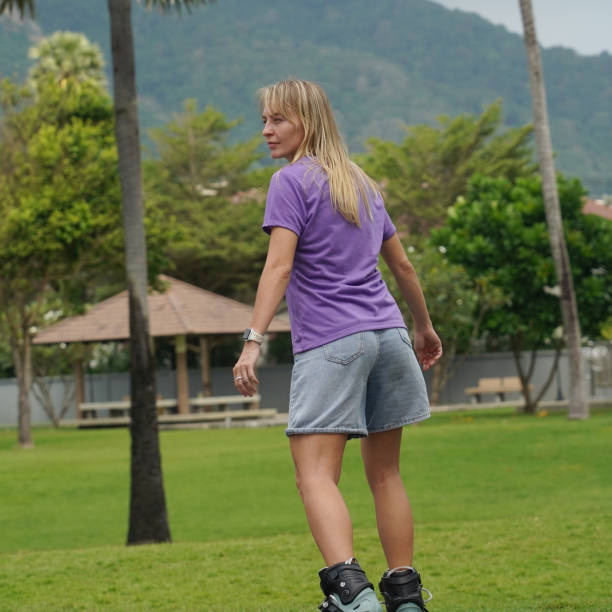
The moment you slip on your inline skates, fasten your laces, and step onto the slope, the feeling of the wind rushing past your ears can easily make you forget one thing—safety. Especially the braking system.
Some inline skates have heel brakes, while others are completely brakeless. Some say brakeless skates look more professional and cool; others think they’re too dangerous. So which one should you choose? This article will give you a comprehensive analysis of the secrets of inline skate braking systems, from structural principles and user experience to suitable users and purchasing/practical advice.
Table of Contents
1. What is the difference between inline skates with brakes and those without?
In the world of inline skates, “with brakes” refers to a rubber brake pad mounted on the back of the frame (usually on the right foot). You simply press your heel back to make the brake pad rub against the ground and slow down to a stop.
“Without brakes,” however, offers more freedom. Skaters rely on their own skills—such as T-stops, power slides, and plow stops—to stop.
Many sources mention that inline skates used for racing, freestyle, and street skating are mostly “brakeless” because brake pads would hinder turning, backward skating, or jumping maneuvers. Simply put:
- Inline skates with brakes → Stable and with a low safety threshold.
- Brake-free inline skates → Flexible, professional, but require high technical skills.

II. Inline skates with brakes: Safer but slightly conservative
advantage
1. Easier to Stop:
The biggest fear for beginners isn’t being unable to glide but being unable to stop. Inline skates with heel brakes give you more peace of mind when going downhill, in crowded areas, or on complex terrain. Simply lift your heel slightly, and the friction will help you stop steadily. Many beginner skaters say that the first few practices using heel brakes helped them master balance much faster.
2. Providing beginners with a sense of “psychological security”
—knowing they can stop at any time—is a source of confidence in skating. Especially for those skating in open spaces for the first time, inline skates with brakes can reduce fear and make you more willing to accelerate.
3. Highly practical and suitable for urban commuting:
Inline skates with brakes are an excellent choice for urban skating, commuting, or park routes. They can help you easily handle traffic lights, pedestrians, and unexpected situations.
shortcoming
1. The brake pads, mounted on the heel, slightly restrict technical gliding.
When performing crossover steps, backward gliding, or slalom maneuvers, the brake pads can easily scrape the ground or cause the foot to get caught. Therefore, many intermediate and advanced skaters remove the brake pads to gain greater freedom of foot movement.
2. Limited braking techniques:
If you only know how to use a heel brake, it’s a common problem to be unable to stop when the brake pads wear out or the speed is too high. You still need to learn other braking techniques to compensate.
3. Appearance and weight:
The brake blocks appear slightly “heavy” visually, which may be a slight disadvantage for skaters who prefer a streamlined or lightweight design.

3. Brake-free inline skates: more freedom, but higher technical requirements.
advantage
1. Cleaner gliding and purer lines
: Inline skates without brakes look more “professional,” with neat racks and clean movements, making it easier to perform various freestyle skating tricks.
2. Rapid skill development
without brakes will naturally lead you to practice techniques like T-stop and powerslide. This “forced growth” can actually make a skater’s skill level improve by leaps and bounds.
3. One less component means one less maintenance point.
The brakeless design is lighter and does not require regular replacement of rubber brake pads, making maintenance more worry-free.
shortcoming
1. Not beginner-friendly
. The lack of brakes means you have to learn how to brake on your own. On slopes or slippery surfaces, if your reaction isn’t quick enough, you may lose control.
2. Higher learning cost:
Mastering powerslide or T-stop techniques requires time and repeated practice. For beginners, it may take a longer adaptation period.
3. Safety Risks:
If you are not yet familiar with braking techniques, inline skates without brakes are indeed more likely to result in falls and injuries. This is especially true in urban environments where the margin for error in emergency stops is low.
IV. How do I determine whether I should choose inline skates with or without brakes?
This part is the most practical. We can evaluate it from four aspects: “scenario, skills, courage, and budget.”
1. Use Cases
- For city commuting, park skating, and leisure use, inline skates with brakes are recommended.
- For racing training, freestyle, and rail practice, choosing brakeless inline skates is more suitable.
2. Skills and Proficiency
- Beginner/Intermediate skaters: Safety first, bring brakes.
- Advanced skaters: With stable technique, they may consider skateboarding without brakes.
3. Environmental factors
- Complex road conditions, many people, many slopes → with brakes.
- Flat tracks and ample gliding area → No brakes.
4. Budget and Model Positioning
- Entry-level inline skates often come with brakes and offer good value for money.
- High-end models often lack brakes, prioritizing speed and lightweight design.
V. Practical Advice: Details of Purchase and Maintenance
1. Brake pad inspection:
Regularly check the heel-brake pad for wear, deformation, or loosening. Replace it when it wears down to a certain extent; don’t wait until it completely fails.
2. Skill training is essential.
Regardless of whether you use brakes, it is recommended to learn the T-stop or power-slide. Mastering multiple braking techniques is an essential safety skill for every inline skater.
3. Protective equipment is essential
. Helmets, knee pads, and wrist guards are never optional. No matter how well you skate, you need to give yourself an extra layer of protection.
4. Remove brakes when necessary.
If you’ve been using inline skates with brakes for a while and your skills have improved, you might find the brake pads hindering your movements. You can try removing them, but make sure you can stop safely using other methods.

VI. Conclusion: The best inline skates are the ones that suit your style.
There is no such thing as “absolutely good” or “absolutely bad” inline skates, whether they have brakes or not.
Brakes represent stability and safety; no brakes symbolize speed and freedom. The real key is how you balance “safety” and “control.”
When you’re about to buy inline skates next time, ask yourself this question:
What kind of scenarios will I be using for skiing?
How many parking techniques can I master?
Do I prioritize safety or freedom of movement?
Finding that answer is the beginning of your true connection with gliding.
May your inline skate journey be filled with the thrill of speed, yet also the ability to stop safely when needed.
Being fast and stable—that’s the mark of a seasoned skater.