Fitness and weight loss benefits of inline skating: Slide and burn fat!
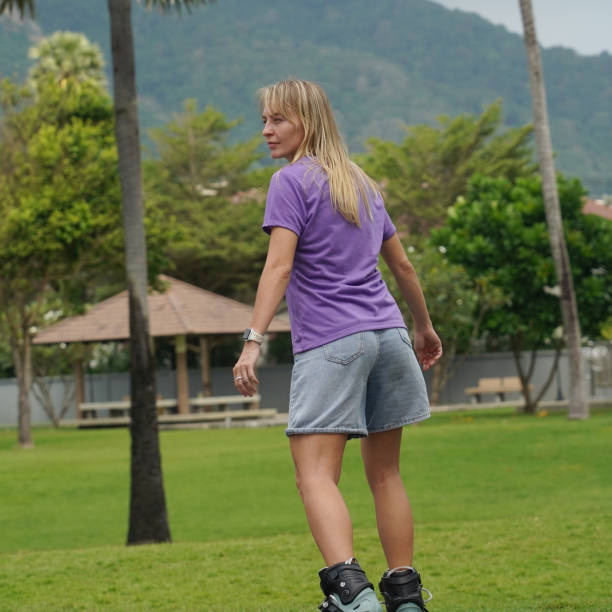
You might have always considered inline skating as a form of recreation, but it’s actually a great way to burn fat all over your body. As you skate, the wind whistles past your ears, your heart rate quietly rises, and sweat slowly drips down your face—it’s both fun and efficient. This article will explain in detail the fitness advantages and weight loss potential of inline skating and share some practical tips to help you skate more scientifically.
Table of Contents
1. Why is inline skating a highly effective fitness exercise?
1. Mixed aerobic and anaerobic training
While skating, your cardiovascular activity increases, burning calories and strengthening your lower body muscles. Data from the International Inline Skating Federation (IISA) shows that 30 minutes of steady-speed skating can burn approximately 285 calories, while 30 minutes of high-intensity interval skating can burn 450 calories. This demonstrates that inline skating provides both aerobic (cardiopulmonary) and anaerobic (muscle strength) training.
Compared to running, inline skating has a much lower impact and is gentler on joints, making it suitable for long-term commitment. For some people with sensitive knees, inline skating may even be safer than jogging. You’ll find that roller skating is not as monotonous as running; the rhythm and propulsion make the exercise fun.
2. All muscle groups are in motion.
While skating, you primarily work your glutes, thighs, and calves, but your core muscles are also constantly engaged as you need to maintain balance. The slight arm swings not only help with coordination but also provide a mild workout for your upper body muscles. Roller skating is a full-body activity; with proper form, you’ll feel your muscles being fully activated.
In addition, core stability training is subtly underway: with each turn or change of speed, the abdomen and lower back adjust the body’s center of gravity, which is very helpful for long-term body shaping and enhancing body control.
3. Low impact, high efficiency
The “glide-push-glide” rhythm of gliding puts much less stress on the knees and hip joints than running. It achieves high-heart-rate training while reducing the risk of injury, making it suitable for people who want to maintain fitness and lose weight in the long term. Whether young, middle-aged, or elderly, almost everyone can find a gliding rhythm that suits them.

II. The Weight Loss Potential of Inline Skating
1. Consumption of calories is considerable.
The calories burned vary considerably depending on weight and skating intensity: a person weighing around 70kg can burn 260 calories in 30 minutes of steady-state skating; high-intensity interval skating can burn 600–800 calories per hour. If you choose a route with inclines or incorporating tricks, the calorie expenditure will be even higher.
In other words, as long as you master the correct intensity, inline skating can be an effective fat-burning tool.
2. Muscle sculpting and boosting basal metabolic rate
Inline skating not only burns fat but also works your lower body and core muscles. More muscle means a higher resting metabolic rate (RMR), meaning you burn more energy even when you’re not exercising. With consistent skating, you’ll not only lose weight but also develop more toned muscles and a more graceful posture.
Engage your core, abs, and lower back in these exercises to stabilize your body and sculpt your curves. With consistent practice, you’ll find your legs and glutes become firmer, and your balance significantly improved.
3. Psychological and Sustainability Advantages
Fat loss isn’t just about physical exertion; it also requires mental motivation. Inline skating is inherently fun, and you don’t have to mechanically march on a treadmill. Gliding along park paths, lakesides, or city greenways, with the wind in your face, instantly lifts your spirits.
toned,In addition, the endorphins released during skating can boost mood and confidence, making exercise a fun rather than a burden. Many skating enthusiasts have reported, “My legs have become stronger, and although I may not have lost weight significantly, my legs are more toned and I look more energetic.”

III. How to scientifically utilize Inline Skating for fat burning and weight loss?
1. Frequency and duration
It’s recommended to do this 3–5 times a week, for 30–60 minutes each time. Regularity is more important than overdoing it once. To enhance fat loss, try High-Intensity Interval Training (HIIT): for example, alternating between 1 minute of fast skating and 1 minute of slow skating. This method keeps your heart rate elevated, burning fat more efficiently.
2. Diversified movements and routes
- Don’t just skate on flat, straight roads: gentle slopes, curves, and changes in speed can all increase energy consumption.
- Try skating or freestyle moves to engage your upper body and core more, thus burning more calories.
- -burningTip: Coordinating arm swing and pushing motions can improve fat burning efficiency and increase gliding stability.
3. Technique and Posture
- —theseSlightly bent knees, an engaged core, and a stable upper body – these basic postures make gliding more efficient.
- Coordinating the push-off with the arm swing allows the body to generate full power.
- Beginners should practice basic movements and braking first, prioritizing safety, and the results will naturally follow.
4. Dietary Considerations
- If the calories burned during skating are offset by high-calorie snacks, the fat-loss effect will be greatly reduced.
- It is recommended to include skating in your calorie budget: combining exercise with dietary control will result in significant fat loss.
5. Data tracking and adjustment
- Use fitness trackers or smartwatches to record gliding distance, speed, and heart rate to help scientifically analyze exercise results.
- Adjust your skating plan based on the records: increase high-intensity intervals or add skill skating to continuously upgrade your training.
IV. Who is Inline Skating suitable for?
Inline skating is especially suitable for people
- For those with sensitive joints: less impact during gliding, making the knee joint safer.
- For those tired of boring exercise: inline skating is fun and effective.
- Outdoor enthusiasts: You can skate in parks, greenways, and city streets.
- For those looking to improve strength and endurance: This workout targets both the lower body and core.
People who need to pay attention
- Beginners: It’s easy to fall, so be sure to wear protective gear.
- For those with high cardiovascular load, high-intensity gliding may cause a rapid increase in heart rate.
- For those who don’t control their diet, exercise has limited effect on fat loss.
- Overtrainers: Muscle fatigue or knee pain requires adequate rest.

V. Conclusion: Let inline skating be your weight loss partner
- Fitness advantages: Full-body participation, low impact, high efficiency.
- Fat-burning potential: Up to hundreds of calories can be burned per hour, with high-intensity interval training being even better.
- Sustainability: Gentle on joints, suitable for long-term use.
- Implementation strategy: reasonable frequency, variety of movements, correct technique, dietary coordination, and data tracking.
- Suitable for: people who want to lose weight, work out, have sensitive joints, and are outdoor enthusiasts.
If you’re looking for a fun and effective way to exercise, inline skating is definitely worth a try. Skating not only burns fat but also relieves stress, shapes your body, and benefits both your physical and mental well-being.