How can heavier riders easily master Inline Skates? A complete guide
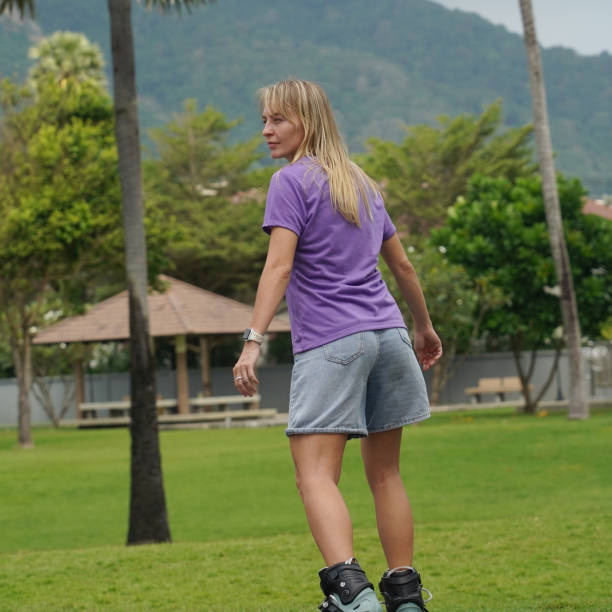
In recent years, inline skates have become increasingly popular in urban sports and leisure activities, attracting a variety of players. For heavier players, trying inline skates is both fun and comes with some unique challenges, such as skating stability, knee and ankle stress, and physical exertion.
Many heavier skaters encounter this in the early stages:
Unstable gliding, prone to swaying from side to side
Rapid fatigue in the ankles, knees, or soles of the feet
Difficulty in controlling the center of gravity during acceleration and cornering
In fact, these problems can all be solved through equipment selection, posture adjustment, footwork techniques, and training methods. Once the methods are mastered, even heavier riders can easily master Inline Skates, achieving long and safe rides while enjoying a smooth and enjoyable experience.
Table of Contents
I. Key Considerations for Heavier Players Choosing Inline Skates Equipment
Equipment is fundamental to skating safety and comfort . Heavier skaters need to pay special attention to the wheels, shell, insole, and support system of Inline Skates.
1. Inline Skates Wheel Size and Hardness Selection
- Wheel diameter: Heavy riders are advised to choose wheels with a diameter of 80–90 mm or larger, which can distribute the weight pressure more evenly.
- Wheel hardness: 85A–90A is recommended to balance durability and shock absorption.
- Advantages: Larger wheels and moderate stiffness make gliding more stable, reduce foot pressure, and improve gliding efficiency.
2. Outer shell and inner lining
- Inline Skates have a sturdy and durable shell that can support your weight and prevent ankle sprains.
- It is recommended to choose a thick, close-fitting lining to absorb some of the impact and reduce pressure on the instep and ankle.
- The removable lining makes it easier to clean and adjust the comfort level.
3. Inline Skates insoles and arch support
- Arch support insoles can effectively distribute pressure on the soles of the feet, relieving forefoot pain and calf fatigue.
- For heavier skaters, insoles are just as important as wheels when skating long distances or commuting in the city.
4. Inline Skates strapping and securing system
- The forefoot area is stable but not constricting, avoiding impaired blood circulation;
- The ankle area provides primary support, ensuring a stable center of gravity;
- A high-quality snap or Velcro system allows for quick adjustment of tightness and fine-tuning during gliding.

II. Inline Skates Posture and Center of Gravity Adjustment
For heavier skaters, their center of gravity and posture directly affect their stability and energy consumption while skating.
1. Maintain a neutral center of gravity with a slight forward lean.
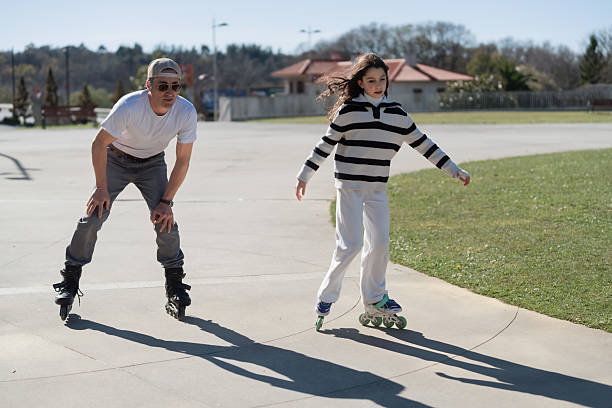
- When gliding, bend your knees slightly and place your weight on the middle and slightly in front of your feet;
- Lean your upper body slightly forward to provide elastic support for your hips and knees, reducing pressure on your knees and lower back.
2. Knee flexion and elastic support
- Slightly bending the knees absorbs the impact from the ground, enhancing gliding stability;
- Avoid stiff knees, otherwise your legs will have to bear your weight directly with each step, which can easily lead to fatigue.
3. Swing your arms naturally.
- Swinging your arms freely can help you maintain your balance, especially when turning or going around obstacles.
- Avoid keeping your arms close to your body, otherwise you will not be able to adjust your center of gravity flexibly and will be unstable while gliding.
III. Inline Skates Timing and Motion Techniques
Timing and gliding power are key to easy gliding for heavier players.
1. Primarily use the midfoot for foot placement.
- Pressing the ball of the foot on the ground can cause fatigue quickly, while pressing the heel on the ground can easily lead to instability.
- The midfoot strikes the ground to distribute pressure, allowing the thighs and core muscles to engage and reducing excessive strain on local muscles.
2. Alternate weight-bearing on the left and right legs.
- When gliding, the center of gravity naturally shifts between the left and right legs, preventing premature fatigue of muscles on one side;
- When turning, subtly adjust your center of gravity using your waist and hips, rather than relying solely on your ankles.
3. Control of the pushing and sliding rhythm
- Pushing and sliding movements should be small and continuous, avoiding large, forceful pushes to reduce energy waste;
- Maintaining a steady pace helps leg muscles achieve greater endurance.

IV. Respiratory and Physical Fitness Management
During long rides, heavier riders burn through their energy faster, making proper breathing and rhythm management crucial.
1. Even breathing
- Inhale through your nose and exhale through your mouth, taking deep, long breaths.
- Coordinate the pushing and sliding rhythm with your breathing, for example, inhale every two steps and exhale every two steps.
2. Control the gliding speed
- Long-distance gliding is not sprinting; going too fast can easily cause premature muscle fatigue.
- It is recommended to maintain a relaxed and controllable pace, improving both physical strength and skills simultaneously.
3. Short breaks and relaxation
- Every 15–20 minutes, slow down slightly in a safe area and move your ankles and legs.
- Maintain muscle circulation and prolong overall endurance.
V. Inline Skates Training Method and Gradual Improvement
1. Increase gliding distance in stages
Beginners should start with 1–2 kilometers and gradually increase to 5–10 kilometers as they become more proficient, avoiding long-distance gliding in one go that can cause muscle fatigue.
2. Strengthen leg and core muscles
- You can strengthen your muscle groups through squats, glute bridges, and core training.
- Strengthening your core helps with center of gravity control, resulting in more stable gliding and less energy expenditure.
3. Inline Skates: Balance and flexibility exercises
- Heavier skaters can practice balance standing, light single-leg support, and ankle mobility training before skating;
- Improve gliding agility and responsiveness.
4. Data Recording and Feedback
- Use a gliding app or watch to record gliding distance, speed, and cadence;
- Adjust the pushing and sliding amplitude, rhythm, and rest time based on the data.

VI. Inline Skates Practical Techniques: Urban Skating Guide
1. Inline Skates Starting Techniques
- When starting, lean your center of gravity slightly forward and support yourself firmly on the balls of your feet;
- Push off the ground gently with your back foot, avoiding large, forceful pushes, and maintain a stable glide.
2. Turning and Obstacle Avoidance
- Observe the route in advance and adjust your center of gravity to naturally lean your body.
- Slightly bend the inner leg and gently extend the outer leg to ensure a smooth turn;
- Keep the weight distributed on the midfoot to reduce pressure on the knees.
3. Uphill and downhill
- When going uphill, shift your weight forward and exert force evenly through your legs;
- When going downhill, keep your center of gravity upright or slightly backward, absorb the impact with your knees, and lightly touch the wheels with the balls of your feet to maintain stability.
4. Sliding on congested roads
- Slow down while maintaining a neutral center of gravity and apply even pressure to the soles of your feet;
- Slightly shifting left and right, the center of gravity naturally sways with the body;
- Using short strides reduces pressure concentration and improves safety.
VII. Precautions and Safety Tips for Inline Skates
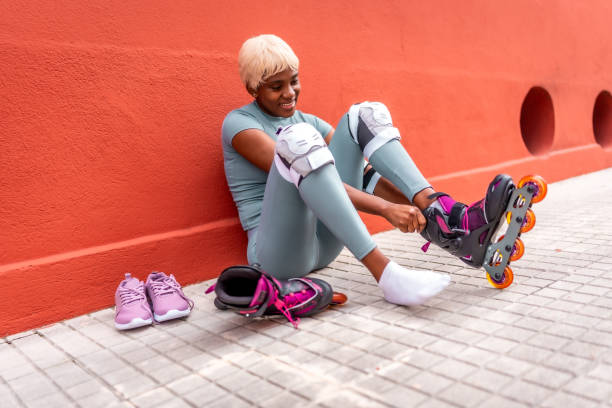
- Essential protective gear includes knee pads, elbow pads, wrist guards, and a helmet to increase safety and reduce postural tension.
- Check equipment: wheels, shoelaces, insoles, and protective gear are in good condition to prevent accidents during skating.
- Warm-up and stretching: Warm up your calves, knees, and ankles before gliding; stretch your muscles after gliding to relieve fatigue.
- Gradual Progression: Long-distance gliding should be done gradually to avoid overloading the vehicle at once.
FAQ: Common questions for heavyweight players playing Inline Skates
Q1: I am heavy, can I do long-distance running?
A: Absolutely, the key is to choose equipment with strong load-bearing capacity, master the correct posture and timing.
Q2: What should I do if my knees are prone to soreness?
A: Keep your knees slightly bent and your center of gravity upright. Perform small, continuous pushing and sliding movements while wearing knee braces.
Q3: Can heavy riders use small-wheeled inline skates?
A: Small wheels cannot support enough weight, which can easily lead to fatigue and instability. It is recommended to choose medium to large wheel diameters (80–90mm).
Q4: How long can I skate without getting tired?
A: With proper equipment matching, posture adjustment, and muscle training, most heavy riders can easily skate 5-10 kilometers without getting tired after becoming proficient.

Conclusion
Heavy riders can easily master Inline Skates. With proper equipment selection, correct posture, precise footwork and center of gravity control, breathing rhythm management, and gradual training, you can effortlessly enjoy long-distance, safe, and smooth skating.
Once you master the techniques, Inline Skates is not just a sport, but a free and fluid lifestyle that makes every skating experience fun and confidence-filled.
Say goodbye to unstable gliding and leg fatigue! Choose our Inline Skates , with their thick support and scientific design, allowing even heavier riders to easily enjoy long-distance gliding.