Inline Skating training method to improve balance: from wobbling to stability, all you need are these steps
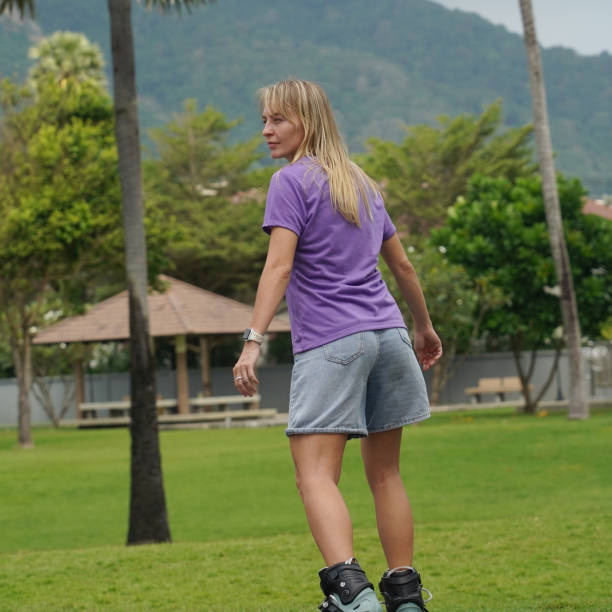
.If you’re new to inline skates, you’ve probably experienced that heart-pounding moment of falling after sliding two meters . Speed isn’t the issue; the real challenge is balance.
Some say the soul of skating is speed, but the root of skating is stability.
You can practice turns, crossovers, and jumps, but if you don’t maintain your balance, these skills are like towers built on sand.
In this article, we’ll skip the tricks and focus on the most fundamental and crucial topic: how to stabilize your body while inline skating. From understanding the causes of imbalance to practical training methods and daily practice plans, we’ll help you glide gracefully instead of teetering on the edge.
1. Why is it so difficult to maintain balance on inline skates?
Ultimately, unsteady skating isn’t about “lack of talent,” but rather the body not yet learning to coordinate itself in new ways. Compared to walking, putting on skates requires a complete resetting of the balance system.
1. The wheel’s contact point is too small, and the friction is too low
. When walking normally, the sole of the foot has a large contact area with the ground, and the center of gravity can be adjusted at any time. However, the contact points of a pulley are like a few round beads. The slightest deviation will cause it to slip, and the margin of error is almost zero.
2. High-top shoes offer
both support and limitations. Inline skates have higher uppers to protect the ankles from injury. However, this also reduces the ankle’s ability to make small adjustments, making the body more “sluggish” in micro-balance.
3. Dynamic inertia + frequent center of gravity shifts
: During gliding, every change in speed, slight turn, or even the slightest unevenness in the ground requires your body to “instantly correct.” A delay in reacting can easily lead to slippage or a shift in your center of gravity.
4. Insufficient core and lower limb strength.
Skating doesn’t rely solely on the feet; it relies more on the coordination of the waist, abdomen, and legs. If your core isn’t trained, it’s difficult to maintain a posture even if your feet are steady.
The keys to improving balance lie in three key areas: “leg strength, center of gravity control, and skating with a low center of gravity.”
In the skating community, someone put it more bluntly: “Barefoot balance doesn’t apply to the world of skate shoes. You have to retrain your body to stand.”
it;So don’t panic. It’s not that you can’t do it, it’s that your body is still “finding its rhythm.”
2. 4 Practical Training Methods to Improve Balance While Skating
The following exercises can be practiced directly while skating. You may feel a little shaky at first, but as long as you persist a few times, you will be surprised to find that you are becoming more and more stable.
1. One-Foot Glide
This is a classic move in all gliding tutorials.
- When skating slowly, lift one foot and let the other foot support the skating independently;
- Hold for 3 seconds, 5 seconds, and then 10 seconds;
- Switch feet and repeat.
At first, you might feel like a “little penguin floating on one foot,” but that’s the point: it allows your body to learn to perceive subtle shifts in your left and right center of gravity.
Tip: Practice by a railing or wall first, then slide out once you’re stable.
/Staggered2. Bubble / Staggered Balance
backward andThe name is cute, but the movement is to gently stagger your feet forward and backward, and then let your body do a slight left-right swing.
- Bend your knees slightly and relax your body.
- Shift your center of gravity left and right, like drawing a small figure “8.”
- Feel which leg is supporting and which leg is leading.
This action can cultivate sensitivity to “dynamic balance” and help you learn to adjust accordingly while skating.
3. Scissor Steps
Many skaters incorporate this “forward and backward stepping” action into their balance training:
- While gliding, keep one foot forward and the other foot backward;
- Slightly change the center of gravity distribution;
- Then change positions and step alternately with your feet.
Don’t aim for speed at first; just be able to feel the balance changes with each forward and backward switch. Once you become proficient, you can integrate it into your skating rhythm.
4. Low-Center Gliding/Half Squat
This is the most easily overlooked, yet most effective action.
Lower your center of gravity, bend your knees, and lean forward slightly. This will:
- Reduce the swing caused by inertia;
- Let the core and legs participate more in stability;
- Improved responsiveness to ground details.
To put it bluntly, the lower you are, the more stable you are. Many skating experts maintain a half-squat posture for a long time—that “light and stable” feeling comes from this.

3. Take off your shoes and practice balance: Don’t underestimate this “ground training.”
You don’t have to wear skates to practice balance. You can practice it secretly at home, at the gym, or even while waiting for the bus at the subway station.
1. Single-leg stand/single-leg squat
- Simple and effective introductory exercises.
- Stand on one leg for 30 seconds, then switch legs.
- Then try a single-leg half squat.
- You can even stand on a balance mat or yoga mat to increase the difficulty.
This set of training can make the stabilizing muscles of the ankles, calves, and soles of the feet more active, laying a good foundation for “micro-adjustments” during sliding.
2. Core and trunk training
Core strength is the engine of all balancing actions.
You can try:
- Plank, Russian twist, glute bridge;
- Side bridges, leg raises, or the “Superman pose” work your lower back muscles.
A strong core helps you maintain your direction, making turns, braking, and crossovers smoother.
3. Yoga and balance ball training
Classic poses like Tree Pose and Warrior III can improve balance control. Practicing with a BOSU ball or a balance disc can help your legs and feet find a foothold even on unstable surfaces.
Many skaters share that yoga helps them skate more effortlessly. This isn’t just about magic; it’s about improving neuromuscular coordination.
4. From Training to Actual Skating: How to Make Your Body “Remember Balance”
Practice is practice, but the most important thing is to let your body integrate these movements into skating.
A few practical suggestions:
- Start slow and don’t rush to show off your skills. Slide on open, flat ground to feel the shift in your center of gravity.
- Practice different rhythms alternately. For example, skate low for a few meters, then do a bubble skate, then a scissor step, so your body learns to switch at any time.
- Set up balance zones. Designate specific areas on your route for single-leg or low-profile skating practice, making it a part of your daily routine.
- Record video feedback. Observe whether you are leaning forward too much, lifting your heels off the ground, or having a stiff posture.
- Embed them in your skating routine. No extra time is needed; just incorporate these movements into your daily skating routine.
An experienced skater once said something very interesting: “True progress comes when you stop practicing and your body naturally balances.”
5. One-week gliding balance training plan (fine-tuning possible)
| Week | Training content | Key Points |
| on Monday | One-legged standing + plank | Take off your shoes and train to activate your core |
| Tuesday | Bubble Skate/Scissor Skate | Slow speed, focus on center of gravity flow |
| Wednesday | Rest + Yoga | Recovery and muscle relaxation |
| Thursday | One-legged skating + low-center-of-gravity skating | Improve sliding stability |
| Friday | Core strength training | Strengthen endurance and balance muscles |
| Saturday | Comprehensive Sliding Day | Integrating training points into actual combat |
| Sunday | Freeride/Relax | Let the body “remember” the sense of balance |
Regularity is key. Training isn’t about “training like crazy”; it’s about “slowly teaching your body the language of balance.”

Conclusion: Balance is the most underestimated ability in skating
Many people focus on speed, tricks, and shoe configuration but forget that balance is the soul of skating.
When you can feel stable, light, and smooth at any speed and on any surface, that’s when you’ve truly mastered inline skating.
Don’t rush to show off your skills; learn to “steady yourself” first.
After practicing for a long time, you will find that balance is not only a skill in skating, but also a state of mind: the more stable, the freer